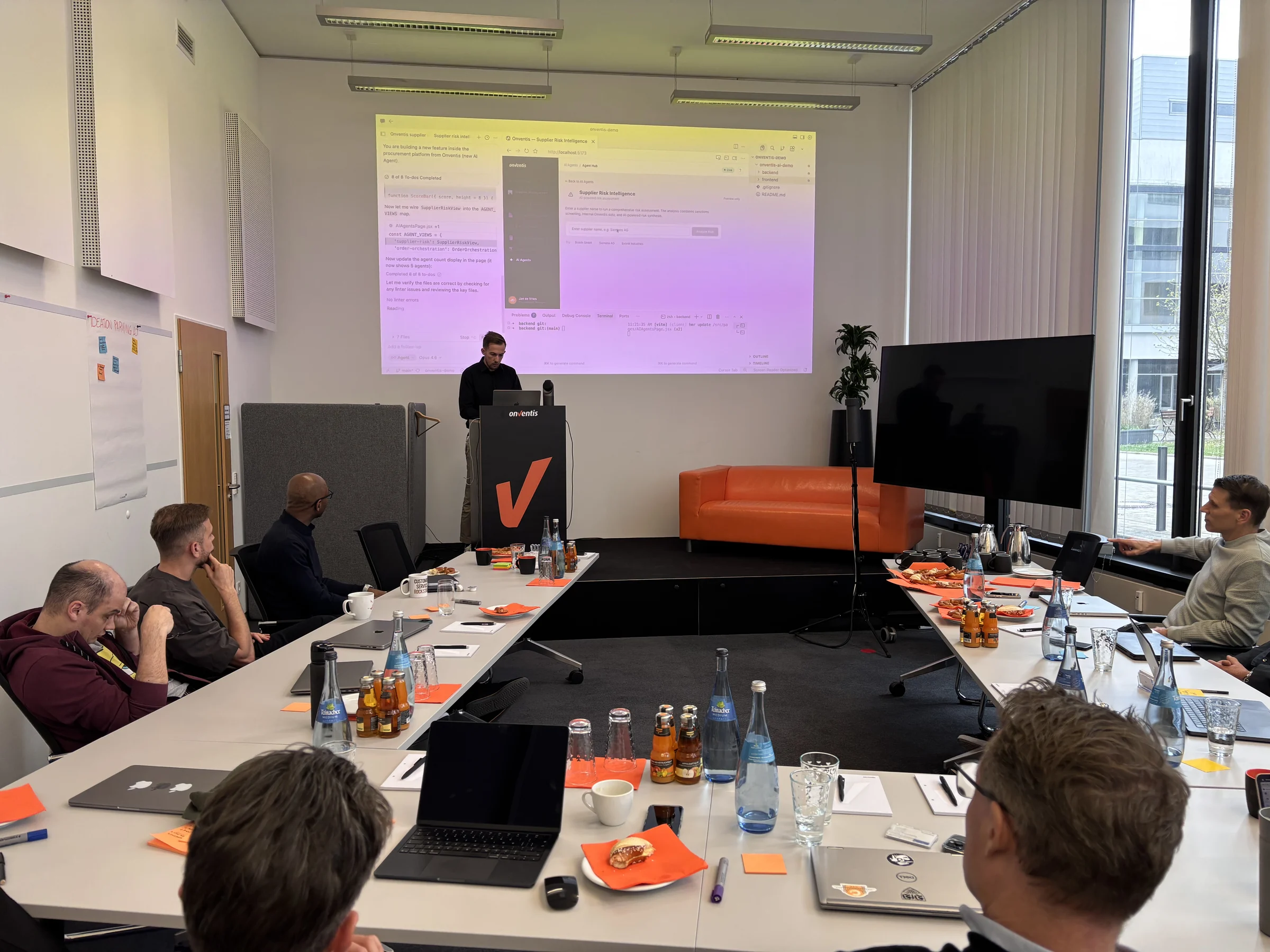
At Corporathon the entry point into AI is always the AI workshop, one day onsite, on one real problem from your team. If that day shows there is more to build, you move into the AI hackathon, the multi-day scale-up of the same principle with several teams and several prototypes at once. This article explains what sits behind the hackathon format and how it differs from the single workshop day.
At Corporathon the entry point into AI is always the AI workshop, one day onsite, on one real problem from your team. If that day shows there is more to build, you move into the AI hackathon, the multi-day scale-up of
The format
Knowledge turns into a working prototype.
An AI hackathon is the multi-day scale-up of the AI workshop day. Definition, the difference from the workshop, and the one-week process explained.
01
Distinction from a classic hackathon
The classic hackathon comes from software development and often runs a weekend as a competition among developers. The hackathon takes that energy and points it at the business day-to-day. Participants need no coding skills. They work with Lovable, Cursor, n8n, Gamma, Claude Code and Custom GPTs on their own data and processes.
02
From AI workshop to AI hackathon
Spark, the AI workshop, is the starting point. One day, one team, one focused problem, a running prototype by evening. Ignite and Blaze scale that same process up to several days and several teams at once. Anyone who already knows the workshop day finds the same way of working in the hackathon, just with more reach across the company.
03
Process in 1 week
A hackathon runs one to five days depending on format, with prep in the same week. The lead-up is four steps (intro call, tools and challenges call, finalizing, prep), then tool workshop, hackathon sprint and result pitches. The full process is at /en/how-we-work/.
04
What comes out at the end
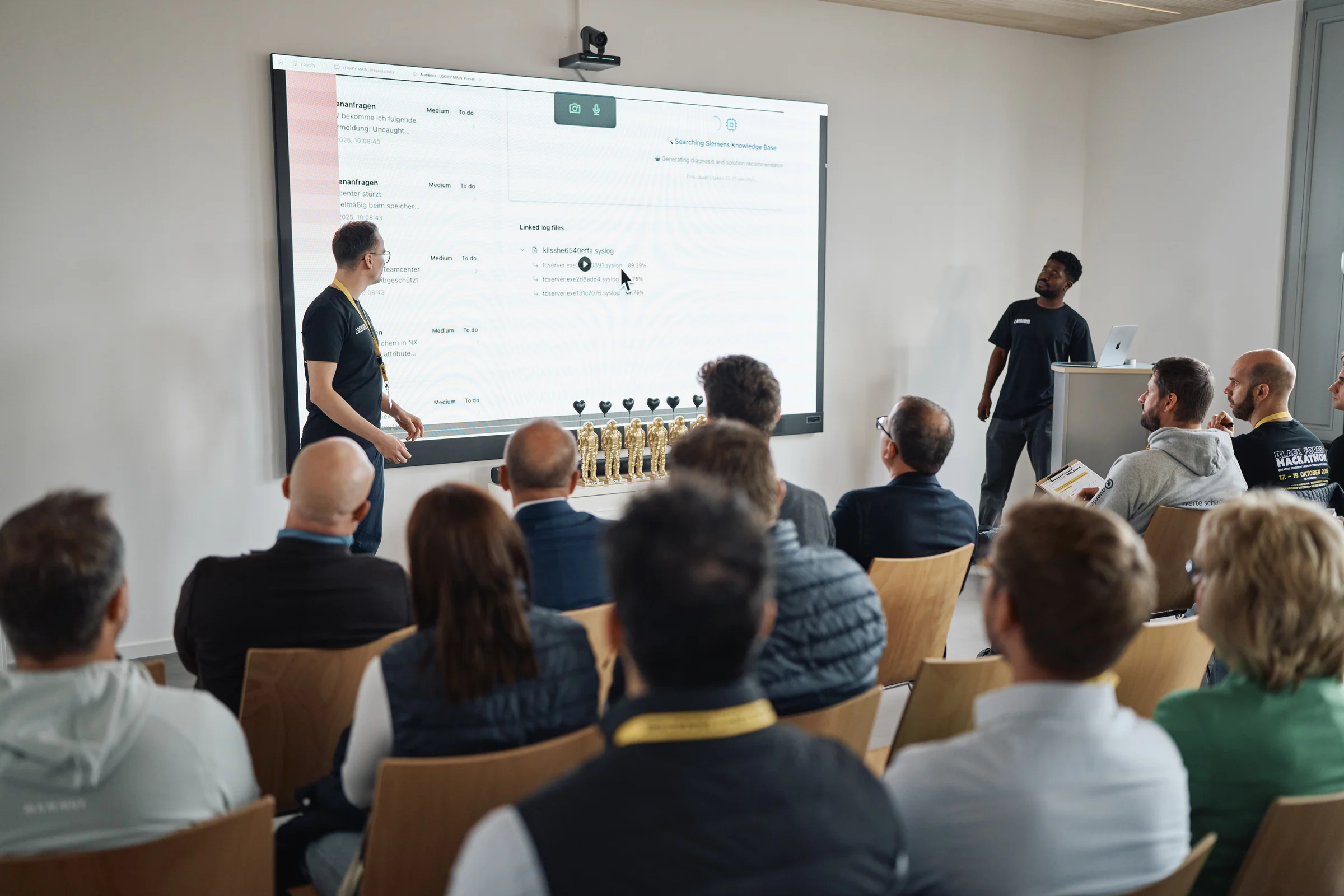
Each team presents what it built, and the best solutions go straight into production. A training becomes a workpiece that stays: a prototype, an automation, a dashboard. Plus an internal AI literacy measures record for participants.
Output, not slides
A hackathon is not a seminar. It is a facilitated sprint where teams rebuild real work with AI.
0 week
from scope to ready-to-run sprint
0 formats
Spark, Ignite and Blaze
0 steps
from call to documented handoff
How it works
Clear steps from scope to handoff.
01
Intro call
Corporathon + sponsor · goal, scope and date
02
Challenge design
Corporathon + team leads · real use cases and tool stack
03
Data & access
Client · approved data, roles and boundaries
04
Tool workshop
Corporathon · teams can use the stack
05
Hackathon sprint
Teams · working prototypes
Next step
Ready for your hackathon?
Book a discovery call directly, we clarify goal, format and date in the call.
The calendar loads external content from Cal.com. Click to load it, or accept "functionality" in the cookie settings so it loads automatically next time.
FAQ
Questions that should be clear before the first call.
An AI hackathon is the multi-day scale-up of the AI workshop day. Definition, the difference from the workshop, and the one-week process explained.
No. The hackathon is built for business teams. You work with tools like Lovable, n8n, Gamma and Custom GPTs that need no classic coding. The opening tool workshop gets everyone to the same level.
One to five days depending on format. Spark runs as the AI workshop for one day, Ignite two, Blaze three to five. From first contact to the result pitches takes one week, including prep.
Training delivers knowledge passively and ends with a proof of participation. An AI hackathon has you build actively and ends with a working result. Retention is much higher, and so is AI adoption.
A working prototype that you own and put into production. Instead of an attendance record you have something that runs, plus a documented competence record.
Teams of four to six work best. Overall we run everything from a single team up to several dozen participants.
All three work. On site creates the strongest momentum, remote is leaner logistically, hybrid is the usual compromise for distributed sites.
You get a documented handoff: prototypes, setup, open items and a recommendation on which results deserve to go to production.
We define target metrics before the sprint, hours saved, cycle time, quality or revenue contribution, and review them in the closing session.
Slots are usually available within two to four weeks. With a clearly scoped use case it can be sooner.
Usually not for smaller formats. As soon as production systems are connected, we bring IT and security in early.