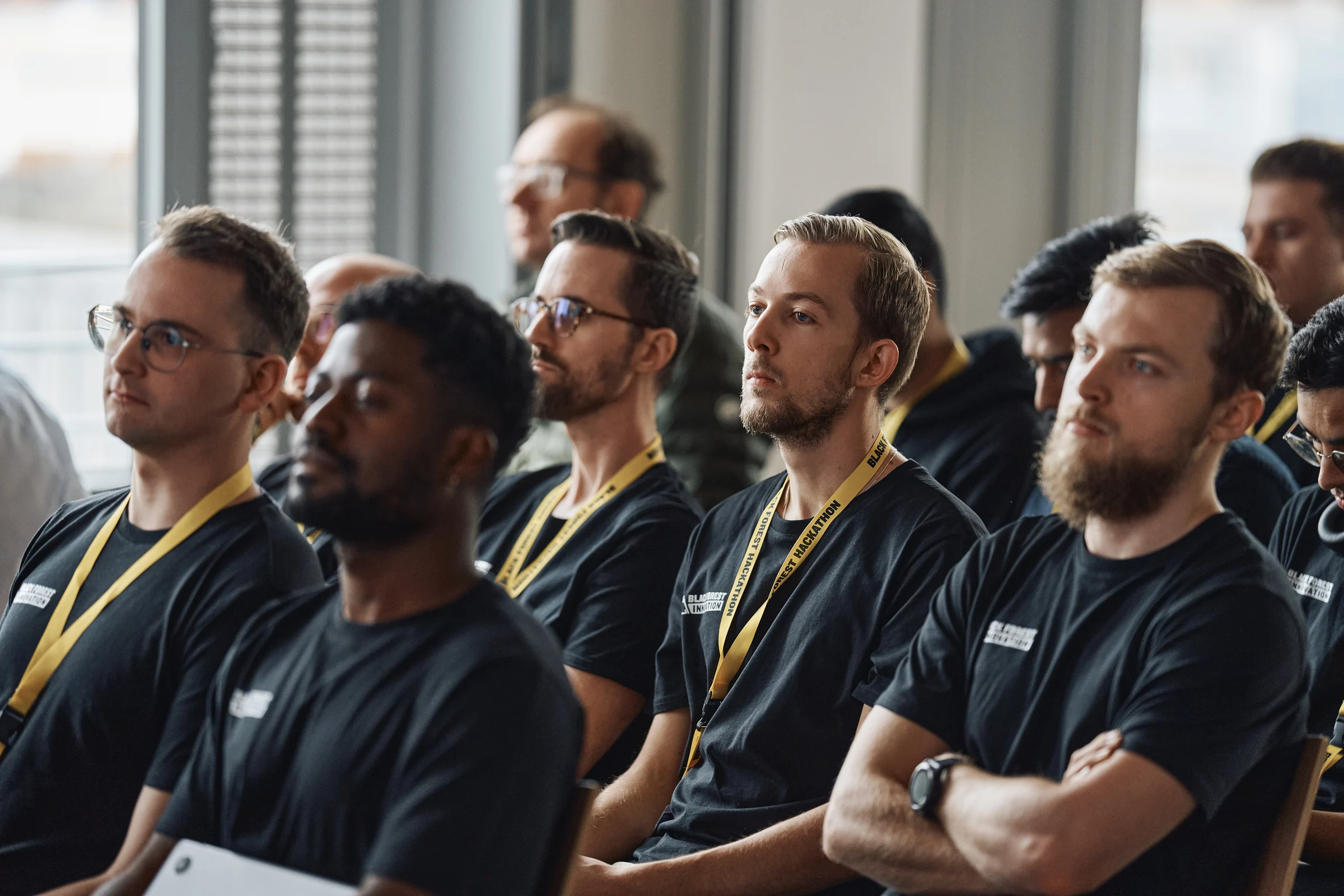
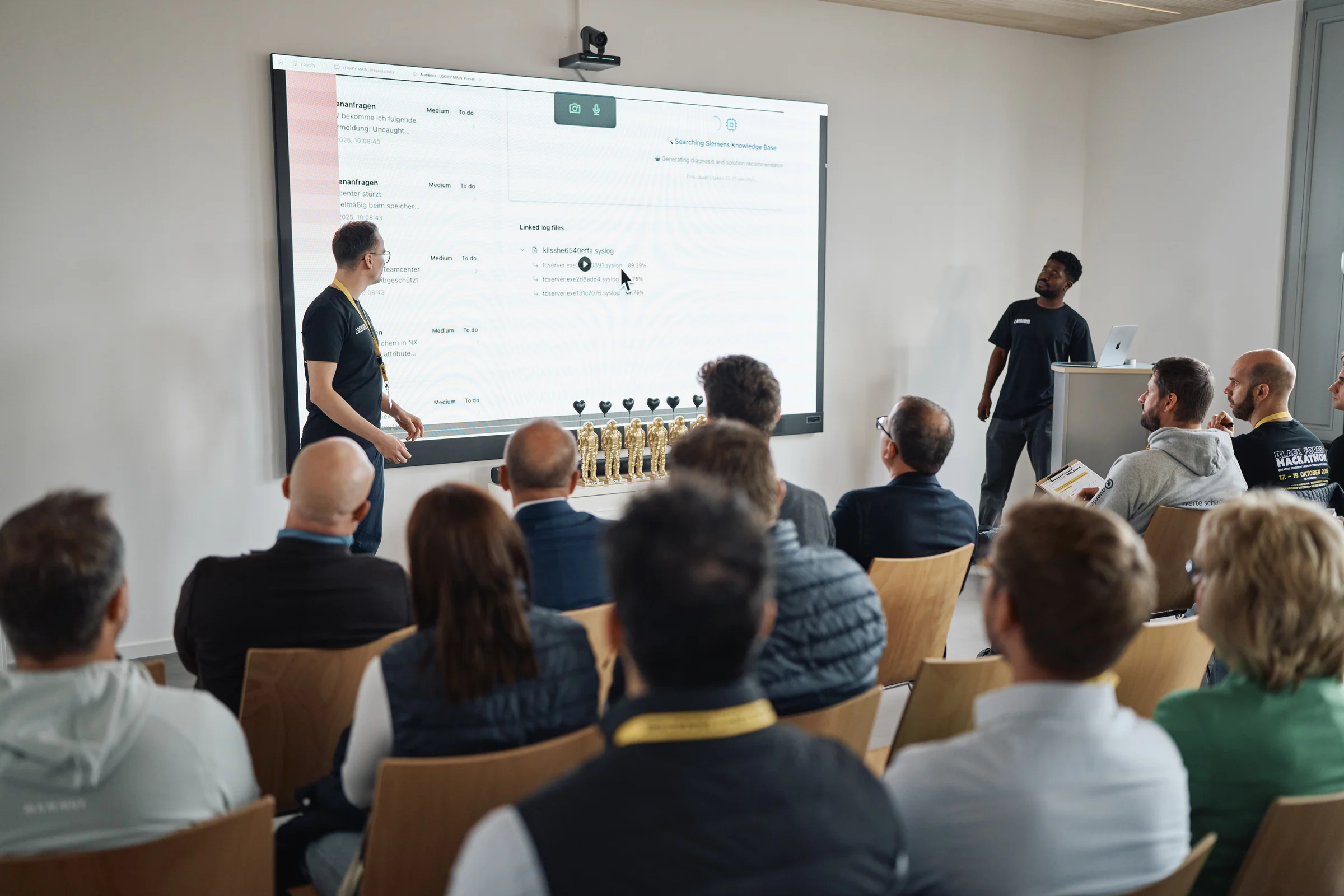
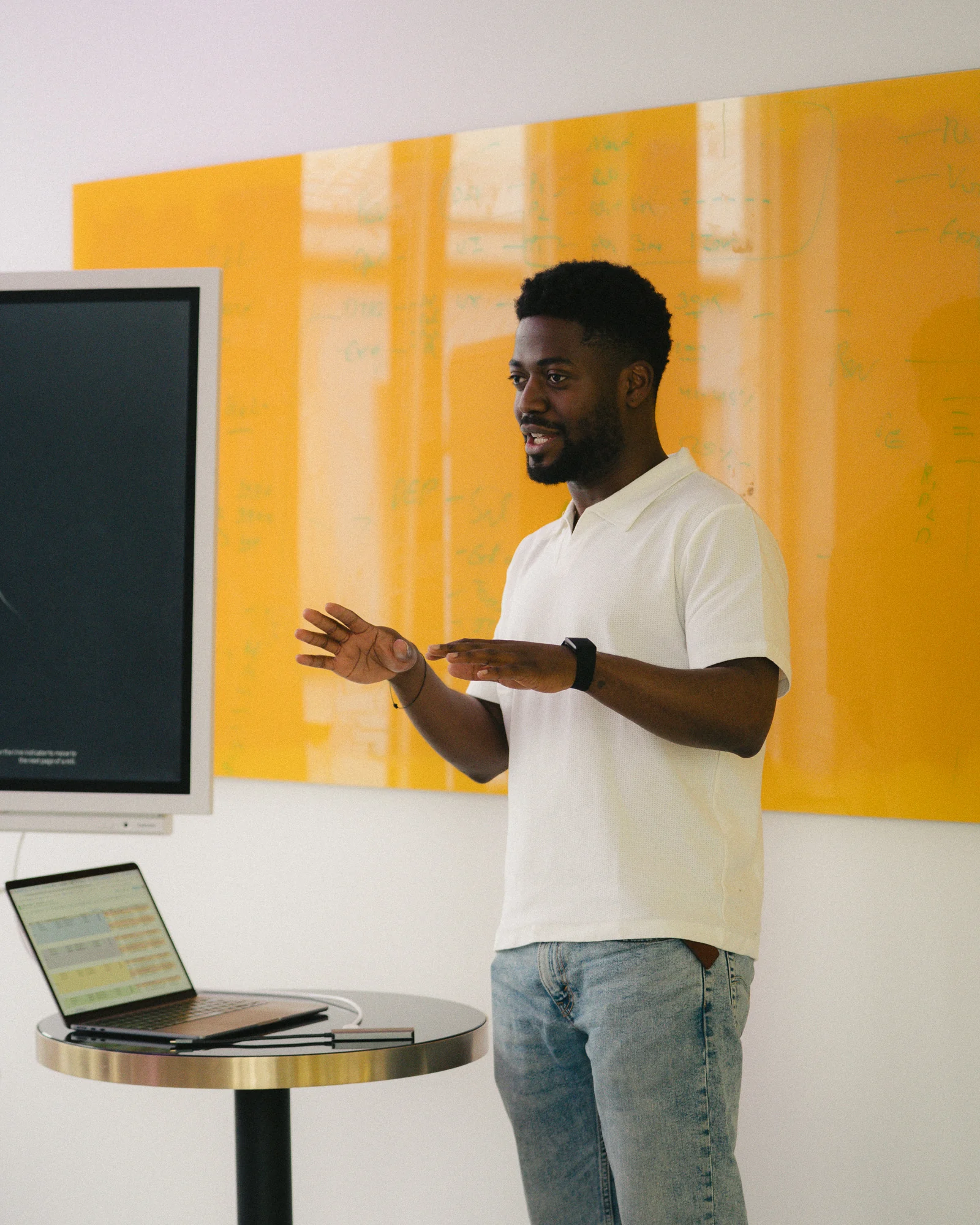
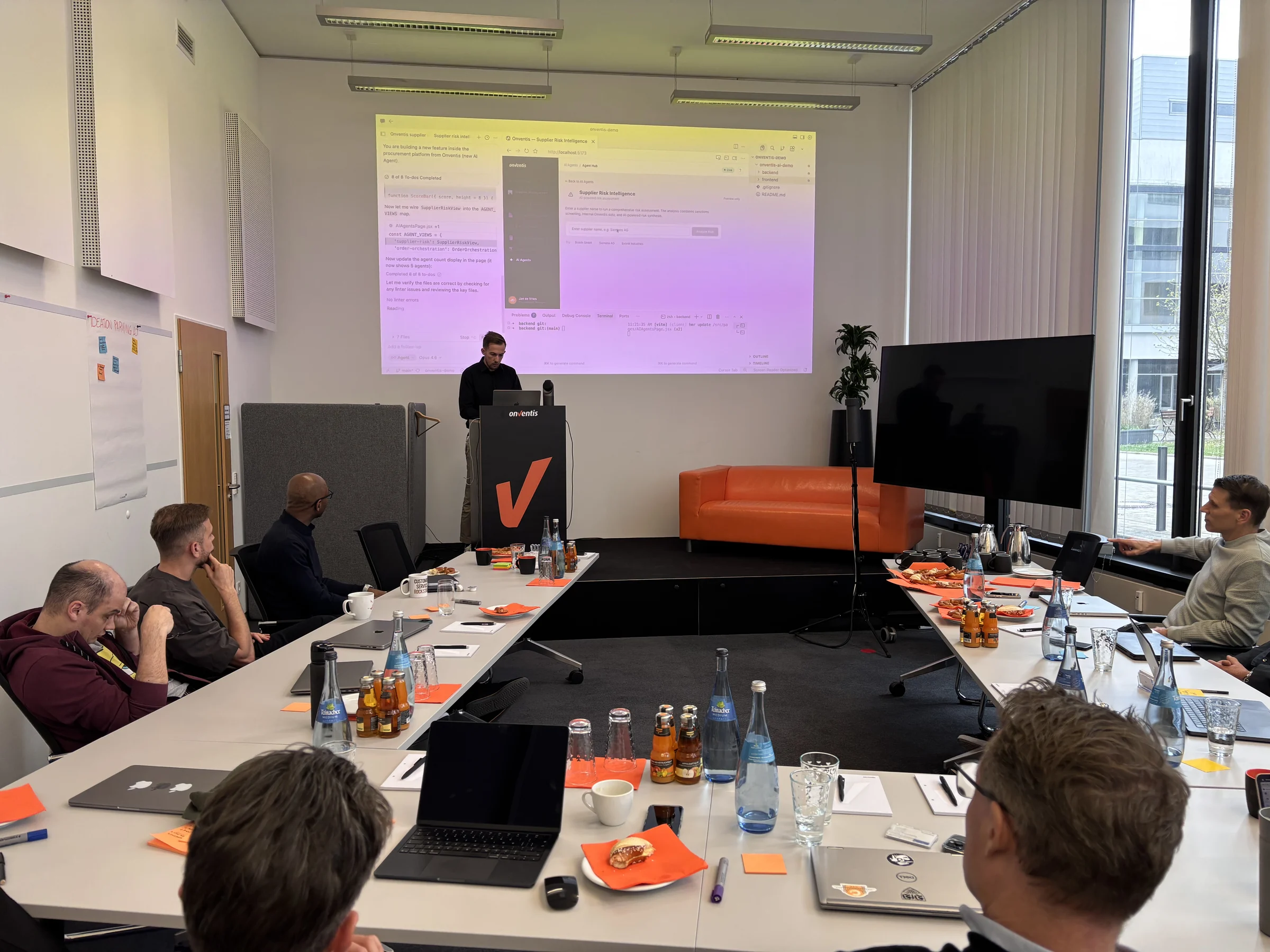
Proof of participation or prototype, unclear without transfer measurement or measurable practical transfer: this comparison shows honestly where classic AI training hits its limits and where the hackathon delivers. The comparison covers the whole Corporathon format, from the 1-day AI workshop entry point through the multi-day hackathon.
Proof of participation or prototype, unclear without transfer measurement or measurable practical transfer: this comparison shows honestly where classic AI training hits its limits and where the hackathon delivers. The
The format
Knowledge turns into a working prototype.
Proof of participation or prototype? The honest comparison between classic training and Corporathon, from the 1-day AI workshop to the multi-day hackathon.
01
The table
Most AI trainings end with a PDF proof of participation and a team that works on Monday exactly as before. It is not the trainers, it is the format. Passive listening barely sticks, and knowledge without application decays in days. The hackathon flips it. Instead of slides your team gets real problems from their own day-to-day and the tools to solve them. At the end there is no checkmark on a list, but something that runs: a prototype, an automation, a dashboard. Retention comes from that first own success with
02
Why retention is the real measure
A proof of participation says someone was present. It says nothing about whether they use the tool on Monday. Retention and adoption are the only numbers that count, and this is exactly where the gap is widest.
03
Output instead of an attendance record
A training prepares you for the work. A hackathon is the work, one week faster and with the whole team on board. What runs on the last day runs afterwards too.
04
Making ROI tangible
A training rarely gives you a number you can honestly check the value against. A hackathon ends with an artifact you can run the math on yourself, hours saved per week times hourly rate times the number of people affected, minus the one-off cost of the workshop day or the hackathon week. We run this calculation together in the discovery call, with your real numbers, not a borrowed case figure.
Output, not slides
A hackathon is not a seminar. It is a facilitated sprint where teams rebuild real work with AI.
0 week
from scope to ready-to-run sprint
0 formats
Spark, Ignite and Blaze
0 steps
from call to documented handoff
How it works
Clear steps from scope to handoff.
01
Intro call
Corporathon + sponsor · goal, scope and date
02
Challenge design
Corporathon + team leads · real use cases and tool stack
03
Data & access
Client · approved data, roles and boundaries
04
Tool workshop
Corporathon · teams can use the stack
05
Hackathon sprint
Teams · working prototypes
Next step
Ready for your hackathon?
Book a discovery call directly, we clarify goal, format and date in the call.
The calendar loads external content from Cal.com. Click to load it, or accept "functionality" in the cookie settings so it loads automatically next time.
FAQ
Questions that should be clear before the first call.
Proof of participation or prototype? The honest comparison between classic training and Corporathon, from the 1-day AI workshop to the multi-day hackathon.
For most goals, yes. If you want AI adoption and real results, a hackathon gets you further than lectures. Retention is higher, the team has something finished at the end. The hackathon also covers documentation duties.
Generic retention percentages are not reliable without a specific study and measurement design. Transfer should therefore be measured in the project through prototype quality, active usage and handoff criteria.
It delivers a documented competence record under Art. 4 EU AI Act. It can serve as a measure supporting AI literacy. Whether the overall program is appropriate is for the company to assess. On top you get working prototypes that a pure attestation never delivers.
Teams of four to six work best. Overall we run everything from a single team up to several dozen participants.
All three work. On site creates the strongest momentum, remote is leaner logistically, hybrid is the usual compromise for distributed sites.
You get a documented handoff: prototypes, setup, open items and a recommendation on which results deserve to go to production.
We define target metrics before the sprint, hours saved, cycle time, quality or revenue contribution, and review them in the closing session.
Slots are usually available within two to four weeks. With a clearly scoped use case it can be sooner.
Usually not for smaller formats. As soon as production systems are connected, we bring IT and security in early.
There is no proof of participation at the end, there is a working result: built workflows that keep running in daily operations.